A roundtable discussion, “The Formation of Health Habits in Schoolchildren — a New Driver of Health Industry Development in Russia,” was held at the Civic Chamber of the Russian Federation.
Experts in various aspects of health management (nutrition, physical activity, stress management, etc.) shared the best technologies and practices that need to be integrated into the new health infrastructure for students, first and foremost in the family, school, and university.
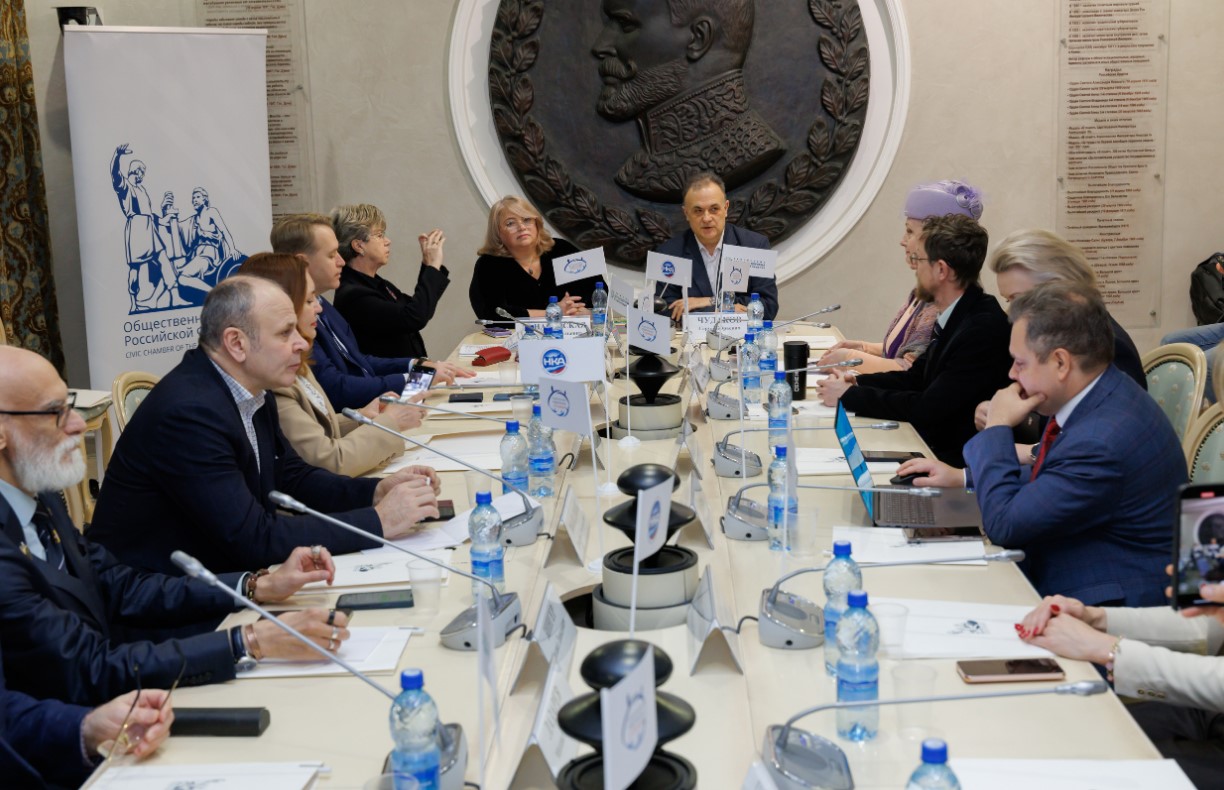
The event was organized by the Commission on Education and Upbringing of the Civic Chamber of the Russian Federation together with the All-Russian Public Organization “National Parent Association for Social Support of the Family and Protection of Family Values” and the Union of Organizations and Specialists in the Field of Health Management “Health of the Healthy,” with the support of the Russian Academy of Sciences, the National Resort Association, the Foundation for the Support of Social Projects, and the project office of the “Preventive Medicine” direction of HealthNet of the National Technology Initiative.
The roundtable discussed a new health-centric model for managing students’ health in the context of modern risks, in relation to the implementation of national projects and the first steps toward cooperation among various stakeholders (parents, educational organizations, government agencies in the social sphere) in fulfillment of the President of the Russian Federation’s 2024 address to the Federal Assembly.
The roundtable was opened by Larisa Sanatovskaya, Executive Director of the National Parent Association, together with Sergey Chudakov, General Director of the Union “Health of the Healthy.” They noted that the health of schoolchildren and families as a whole is a key issue of state policy and a matter of concern for civil society. It is very important at the next stage of its development to establish real mechanisms for preserving the health of family members that will be understandable and accessible to all Russians.
In her welcoming speech, Natalia Kremnyova, Director of the Foundation for the Support of Social Projects, emphasized that the issue of schoolchildren’s health is one of the most acute at the intersection of medicine, education, and social relations, and noted the key role of social entrepreneurs in solving these tasks by creating affordable solutions for all children, including those with developmental differences. The Foundation actively supports initiatives in this area because fostering healthy habits in schoolchildren is the foundation of future society.
Sergey Chudakov, General Director of the Union “Health of the Healthy” and co-head of the “Preventive Medicine” direction of the National Technology Initiative, highlighted the role of the national “Health of the Healthy” Ecosystem in preserving family health. The federal project “Health of the Healthy” is aimed at effective prevention and early diagnosis of various diseases through the creation of a digital ecosystem designed to simplify interaction between regional residents and specialists in healthcare, sports, and the market of health-preserving services.
It was described how modern scientific knowledge and digital technologies make it possible to give new substance to the strategy proposed by Alexander Razumov, President of the National Resort Association and Academician, back in the early 2000s. The Union’s efforts are aimed at creating a national “human-centered” ecosystem for health preservation at the regional level across the country. Both each individual, organized collectives, and the state will receive tangible benefits from it.
Chief physician of the DiLUCH sanatorium and resort complex Ekaterina Belus, in a co-report with Vera Sevryukova, General Director of the complex (Anapa) and member of the Board of the National Resort Association, focused on the enduring value of the impact of Russia’s sanatoriums and resorts for health improvement and family recreation, emphasizing the need to support, at the state level, the systematic referral of healthy children with their parents to sanatorium treatment. She pointed to the need to use domestic health resorts in a comprehensive state strategy to improve the health of children and families. The sanatoriums of Anapa have accumulated unparalleled experience in this matter.
Participants in the roundtable also drew attention to the interdisciplinary and interagency nature of the problem of schoolchildren’s health. Among the main factors shaping children’s health, they named a favorable social environment, abstaining from harmful habits, physical activity, mental health, and more. They spoke about the dangers of internet addiction and pointed to the need to develop a national model of information security for minors, including education not only for children but also for parents, teachers, and doctors. They also advocated increasing the number of physical education classes in school.
The experts concluded that, first and foremost, parents’ attitudes and lifestyle affect schoolchildren’s health, so it is they who should create conditions and motivate children to engage in physical education and sports, teach their children the basics of proper nutrition, manage emotions, avoid stress, etc.
The round table was also attended by the deputy director of the Social Projects Support Fund Nikita Novosadov, the head of the competence center “School of Organizers of Communities and Projects of the Movement “Healthy Health”,” member of the Coordinating Council of the National Parents Association Irina Galanova, first deputy general director of the Union “Healthy Health” Alexey Dubasov, head of the competence center “Health-Forming Pedagogy” of the Union “Healthy Health,” M.D., Ph.D. Mikhail Lazarev, marketing director of NL International, the strategic partner of the competence center “Personalized Nutrition” of the Union “Healthy Health” Olga Milovanova, federal coordinator of the competence center “Biomechanics of Health” of the Union “Healthy Health” Dmitry Kholodnyak, President of the Association of Myofunctional Therapy and Health-Preserving Technologies Mikhail Zinger, president of the Imperium Group of Companies, the strategic partner of the competence center “Light and Health” Igor Minin, head of the Occupational Hygiene Department, advisor to the director of the Research Institute of Transport Hygiene of Rospotrebnadzor Valery Kaptsov, director of the Irina Viner International Academy of Sports Olga Tsygankova, and others.
The initiative to launch the federal project “Schoolchild Health” and create a competence center of the same name within the Union “Healthy Health” for the long-term cooperation of various entities involved in managing student health was supported by the Commission on Education and Upbringing of the Civic Chamber of the Russian Federation and all participants of the round table.
Discussion of the “Schoolchild Health” project and the creation of the Competence Center will continue at the annual all-Russian congress of the National Parents Association in February.
Media coverage of the round table:
https://www.academyviner.ru/tpost/1fne2mzth1-kruglii-stol-formirovanie-privichek-zdor
https://dzen.ru/b/Z6CsRCDYahWnFoiY
https://obrazovanie.press/news/tpost/8mkd54jx31-v-obschestvennoi-palate-o-zdorove-osanke